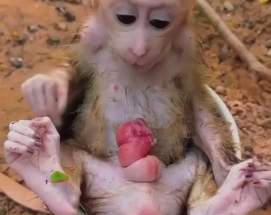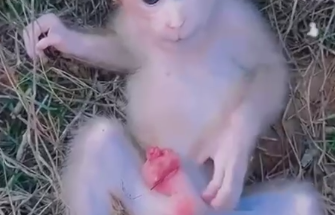
The afternoon sun slanted gently through the slatted windows of the rehabilitation cottage, casting warm golden stripes across the wooden floor. The air carried the notes of soft forest birdsong, mixed with the faint smell of fresh herbs drying on the shelves. It was a peaceful place—quiet, nurturing, and full of hope. And today, it would witness something tender and important: the first gentle bath of a newborn baby monkey who had just arrived in his new temporary home.
Suri, a young wildlife caretaker with years of experience, moved quietly through the room, preparing everything she would need. Though she had bathed hundreds of rescued animals before, newborns always made her heart flutter with gentle protectiveness. Their fragility, their innocence, their uncertain beginnings—they all demanded not only technique, but tenderness.
The tiny passenger currently napping inside a soft, heated basket had certainly had a rough start. Found alone near the forest edge a day earlier—weak, cold, and covered in dirt and dried leaves—the newborn monkey had been brought to Suri by a forest officer. No mother was found. No troop answered calls. No tracks suggested where he had come from or why he had been abandoned. Whatever the story was, the little one now depended entirely on human kindness.
Suri leaned over the basket and smiled softly. The newborn monkey—whom she had named Kabu, meaning “little sprout”—slept curled on his side, tiny fingers wrapped around the corner of a fleece cloth. His breaths were small and fast, but steady. He had eaten earlier, warmed up, and now rested peacefully. But the dirt matted on his fur, the twigs stuck between his toes, and the patches of dried mud under his tiny arms made it clear he needed his first cleansing bath.
A bath would not only clean him—it would encourage circulation, soothe sore skin, and help him feel secure. But newborn primates were extremely sensitive; every step required caution.
Suri whispered gently, “All right, little Kabu. Today you get your first bath. A new beginning.”
She filled a shallow basin with warm water—not hot, not cold, but the perfect middle that mimicked maternal warmth. Checking with her wrist, she nodded in satisfaction. Beside it she placed a soft cotton cloth, a tiny wooden scoop, a drop of mild botanical cleanser specially made for wildlife infants, and a fluffy towel warmed by the hearth.
Before waking Kabu, she rubbed her hands together to warm them. Newborn monkeys often reacted fearfully to sudden temperature changes. Calmness was essential.
When she finally lifted him, he stirred slightly, stretching his tiny arms. He opened his eyes—still cloudy from infancy—and blinked up at her with trust he did not consciously understand but already leaned into instinctively.
“You’re safe,” she murmured, cradling him securely against her chest. “Let’s make you comfortable, little one.”
Kabu gave a soft, breathy squeak.
Suri brought him to the basin. The room was silent except for the crackling hearth and the faint splash of water as she dipped her fingers in. Slowly, she lowered Kabu until his little feet touched the warm surface. He twitched, surprised by the sensation, but did not cry. His hands gripped her thumb, tiny and determined.
“That’s right,” she soothed. “Just feel the water. Nothing scary.”
She took the cotton cloth, dampened it, and gently wiped his tiny toes first—the least intimidating way to begin. Dirt lifted quickly, leaving pale, clean skin beneath. His toes flexed, enjoying the warmth. Encouraged, Suri moved upward, supporting him fully while bathing him in delicate strokes.
Whenever he made a soft noise, she paused and hummed gently. Her voice calmed him, the vibrations mimicking the soothing murmurs a monkey mother would make in the wild. He relaxed again each time, leaning into her touch.
Soon, the dried mud softened and washed away. The tiny twigs caught in his fur loosened. Suri worked slowly, wiping one area at a time—under his chin, his delicate arms, his back, the little tuft of fur on his head that stuck up like a tiny sprout. She was careful around his belly, where monkeys were most sensitive.
At one point, Kabu lifted his face and pressed it lightly against her palm. It was a quiet gesture, almost like gratitude—or maybe simply instinct—but it warmed her heart deeply.
“You’re doing so well,” she praised softly. “Such a brave little baby.”
When it came time to rinse him, she used the wooden scoop, letting warm water cascade gently across his skin. Kabu blinked at the sensation, tilting his head, almost curious. His tiny fingers moved as if trying to catch the falling droplets.
Suri laughed softly. “Oh? You like the water now?”
She used only a tiny dab of the mild cleanser to remove the stubborn dirt around his fur. The floral scent filled the air—gentle, calming, and safe for newborns. With each soft stroke, Kabu looked less like the lost, neglected infant she had found yesterday and more like a thriving little monkey finally receiving the care he deserved.
Once fully cleaned, she lifted him from the water and placed him immediately against the warm towel, wrapping him snugly. Newborns dried best when pressed gently rather than rubbed, so she patted him softly, layer by layer.
Kabu, now warm and clean, relaxed visibly. His fur fluffed softly as it dried, sticking up adorably in some places like little feather tufts. His eyes half-closed again, comforted by the warmth of the towel and the sounds of Suri’s gentle humming.
She carried him back to his heated basket, laying him on a fresh fleece cloth. He made a tiny chirping sound, reaching his hands toward her. Suri stroked the top of his head with the back of her finger.
“All right, little one,” she whispered. “I’m still here. You’re home now. You’re safe.”
Kabu curled into a tiny ball, tucking his hands under his chin. After a moment, he let out a soft sigh—content, secure, warm, and clean for the first time in his young life.
Suri watched him with quiet tenderness.
Rescuing wildlife was rarely easy. Many animals arrived frightened, weak, or alone. But moments like this—moments of gentleness, trust, and healing—made it worth every long night and tearful hour.
And as Kabu drifted into peaceful sleep, his first bath behind him, his new life ahead of him, Suri whispered a promise into the stillness of the room:
“I’ll help you grow strong enough to return to the forest where you belong. But until then, you will never be alone again.